AAIC offers a variety of educational events before the main conference begins. These workshops and preconferences provide an added opportunity to explore the most up-to-date basic science, the newest findings, and the latest practices for the prevention and treatment of Alzheimer's disease and other dementias.
For complementary educational and professional development sessions that happen during the main conference (like the ISTAART Skills Workshops), look to our Scientific Sessions page.
Independence and Sponsorship Disclosure: The Alzheimer's Association has received funding by means of sponsorship to support the delivery of our conference from multiple sponsors. The sponsors have had no editorial input or control over the agenda, content development or choice of speakers, nor opportunity to influence except for the corporate-sponsored symposia presentations. View our full sponsors list.
On This Page:
- Friday: Full-day events
- Friday: Morning events
- Friday: Afternoon events
- Saturday: Full-day events
- Saturday: Morning events
- Saturday: Afternoon events
Friday: Full-day events
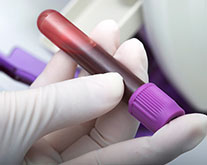
Mastering Fluid Biomarkers to Unlock the Secrets of Alzheimer’s Disease and Related Dementias
Friday, July 10: 8 a.m. – 5 p.m.
View the agenda
This workshop provides an in-depth overview of the principles, methodologies and clinical and research applications of AD biomarkers in cerebrospinal fluid (CSF) and blood. It will combine laboratory-focused sessions on neurochemistry, sample handling, assay development, quality control and regulatory considerations with clinical-focused discussions on implementation, context of use, disclosure, and ongoing gaps and opportunities in the field.
This ISTAART Immersive is organized by the Biofluid Based Biomarkers Professional Interest Area.

Measuring What Matters: Evaluating, Selecting and Developing Cognitive Outcome Measures Using Advanced Psychometrics and Clinimetrics
Friday, July 10: 8 a.m. – 5 p.m.
View the agenda
This workshop will equip attendees with the skills needed to design and critically evaluate studies that assess the measurement quality of cognitive outcome measures. It will discuss methods of assessing the properties of health measurement instruments used in dementia research and ways to apply those methods to develop new or evaluate existing measurement instruments. The overall aim of this workshop is to advance the quality of clinical outcome measures in dementia and improve the utility of data derived from those measures in analyses.
This ISTAART Immersive is organized by the Cognition Professional Interest Area.

8th Annual NIA-AA Symposium — Enabling Precision Medicine for Alzheimer’s Disease Through Open Science
Friday, July 10: 8 a.m. – 5 p.m.
View the agenda
The 8th Annual NIA-AA Symposium — Enabling Precision Medicine for Alzheimer’s Disease Through Open Science — will highlight NIA-supported translational research programs that use precision medicine and open-science approaches to advance Alzheimer’s disease (AD) and AD-related dementias (ADRD) research. The symposium will focus on understanding the complex and heterogeneous etiology of AD/ADRD, developing next-generation animal models, identifying and validating disease-relevant targets and biomarkers, advancing novel targets into drug discovery, and applying precision medicine strategies to therapy development.
Friday: Morning events

AI in Alzheimer’s: From Data Pipelines to Explainable Analysis
Friday, July 10: 8 a.m. – noon
View the agenda
This workshop brings researchers together to experience how artificial intelligence (AI) can be applied to neuroimage analysis and to consider the social implications of these technologies in AD research. Participants will be introduced to AI-driven imaging pipelines based on deep learning and large language models. The session will showcase foundational models trained on brain images to track brain aging, including a ChatGPT-like tool that enables prompt-based interaction with brain images from individuals with AD. Beyond technical methods, the workshop will address sustainable AI applications for neuroimaging in low- and middle-income countries.
This ISTAART Immersive is organized by the Neuroimaging and Sex and Gender Differences in Alzheimer's Disease Professional Interest Areas.

Leadership Skill Development Workshop for Emerging Scientists in Alzheimer’s Research
Friday, July 10: 8 a.m. – noon
View the agenda
This workshop will explore key aspects of leadership, focusing on communication skills, decision-making, and effective management styles. In particular, it will focus on topics such as resilience, emotional intelligence, shaping a team, and explore other relevant leadership challenges in the scientific workplace. This workshop goes beyond theoretical concepts, providing tangible tools and resources to empower you as a leader in the field.
This ISTAART Immersive is organized by the Alliance of Women Alzheimer's Researchers (AWARE) and PIA to Elevate Early Career Researchers (PEERs) Professional Interest Areas.
Analytic Approaches for Neuropsychiatric Symptom Scales with Non-Normal Distributions
Friday, July 10: 8 a.m. – noon
View the agenda
This workshop will review commonly used neuropsychiatric scales and statistical approaches based on data distribution, with examples from Alzheimer’s disease datasets to demonstrate regression techniques. It will provide an overview of scales used to measure neuropsychiatric symptoms in neurocognitive disorders and explore data characteristics and selection of appropriate modeling approaches. Participants will receive a dataset and R code for hands-on practice using linear and non-parametric methods, with interactive guidance from presenters throughout.
This ISTAART Immersives workshop is organized by the Design and Data Analytics and Neuropsychiatric Syndromes Professional Interest Areas.
Getting Started with Neuroimaging Analysis
Friday, July 10: 8 a.m. – noon
View the agenda
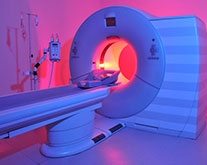
In this workshop, attendees will have the opportunity to view, process, analyze and interpret medical imaging data from various magnetic resonance imaging (MRI) modalities, as well as positron emission tomography (PET) scans employing amyloid and tau tracers. It will provide an introduction to core imaging data structures, visualization tools and fundamental quantitative concepts, and explore essential neuroimaging workflows, including: tissue segmentation, image co-registration, quantitative analysis of static and dynamic PET data, and pre-processing steps of functional MRI (fMRI) or diffusion tensor imaging (DTI).
This ISTAART Immersive is organized by the Neuroimaging Professional Interest Area.

Don’t Lose People in Translation: How to Design Multiculturally Inclusive Clinical Practice and Research
Friday, July 10: 8 a.m. – noon
View the agenda
In this workshop, attendees will gain skills in adapting clinical and research tools and health care information for multicultural communities affected by dementia. It will explore challenges faced across cultural, linguistic and educational backgrounds, and engage in hands-on activities, including small-group "adaptation labs," to critique and modify tools for clarity, accessibility and cultural responsiveness.
This ISTAART Immersive is organized by the Partnering with Research Participants Professional Interest Area.

Assessing and Addressing Hearing, Vision and Olfaction in Individuals with Cognitive Impairment
Friday, July 10: 8 a.m. – noon
View the agenda
This workshop will provide an introduction to hearing, vision and olfaction impairment in individuals with cognitive impairment across diverse settings. The session will offer hands-on training in both the assessment of sensory health in individuals with cognitive impairment, and the assessment of cognitive function in individuals experiencing hearing and/or vision impairment. Attendees will leave with practical information that they can incorporate in their own research or clinical practice.
This ISTAART Immersive is organized by the Sensory Health and Cognition Professional Interest Area.
Friday: Afternoon events

Cognitive Resilience in Alzheimer’s Disease: Concepts, Statistical Methods, and Machine Learning/AI
Friday, July 10: 1 – 5 p.m.
View the agenda
This workshop explores the evolving concepts of cognitive reserve, resilience and protective factors in Alzheimer’s disease. Attendees will gain a clear understanding of how reserve and resilience are defined and measured, while practicing cross-sectional and longitudinal analyses using R. This workshop will cover fundamental concepts, methodological approaches and innovative perspectives on operationalizing resilience, including machine learning strategies to rethink traditional models.
This ISTAART Immersive is organized by the Reserve, Resilience and Protective Factors, Design and Data Analytics, and Neuroimaging Professional Interest Areas.

Practical Approaches to Dietary/Nutrition Assessment for AD/ADRD Research
Friday, July 10: 1 – 5 p.m.
View the agenda
This workshop will provide hands-on experience with key dietary assessment tools and a structured approach to evaluating their strengths, limitations and cultural relevance. Participants will engage with 24-hour recalls, FFQs, short diet screeners and emerging subjective tools by completing sample assessments, reviewing their entries and participating in guided critique. The session addresses common sources of error, bias and misreporting, and examines how usability, administration format and participant burden affect data quality.
This ISTAART Immersive is organized by the Nutrition, Metabolism and Dementia Professional Interest Area.

Shiny Your Research: Interactive Dashboards in R
Friday, July 10: 1 – 5 p.m.
View the agenda
This workshop equips dementia researchers to design, build and share interactive dashboards using R Shiny, an open-source framework for creating dynamic web applications directly from R. Through live demonstrations, guided coding and hands-on exercises, participants will progress from creating a simple visualization to developing a fully functional Shiny dashboard, applying best practices in reactivity, modular design and reproducible workflows.
This ISTAART Immersive is organized by the Design and Data Analytics Professional Interest Area.

Basics of Genetic Analysis
Friday, July 10: 1 – 5 p.m.
View the agenda
This workshop will provide an introduction to the fundamentals of genetic analysis within the context of brain imaging research. Participants will gain practical experience in analyzing genetic data, from single-nucleotide polymorphism (SNP) analyses to genome-wide approaches and polygenic risk score (PRS) calculation, with a focus on their application to imaging genetics research. This session is tailored to participants interested in exploring genetic data within imaging studies.
This ISTAART Immersive is organized by the Neuroimaging Professional Interest Area.

Engaging People with Lived Experience of Dementia in Advocacy and Research: Implementing Promising Practices
Friday, July 10: 1 – 5 p.m.
View the agenda
This workshop will introduce attendees to a set of promising practices for engaging people with lived experience of dementia in research and advocacy. The session will explore these promising practices through sequential small group discussions, building knowledge of the content and meaning of the practices and exploring how to implement them in different cultural, linguistic and educational contexts. Attendees will leave with practical, applicable strategies that they can apply in their dementia research or clinical practice.
This ISTAART Immersive is organized by the Partnering with Research Participants and the PIA to Elevate Early Career Researchers (PEERs) Professional Interest Areas.

Speech and Language Measures in Alzheimer’s Disease and Related Dementias
Friday, July 10: 1 – 5 p.m.
View the agenda
This workshop will convene clinicians, neuropsychologists, linguists and data scientists to develop a harmonized framework for speech and language biomarkers in ADRD. The session will map existing datasets and methodologies; identify convergences and divergences in constructs, languages and validation practices; and co-develop practical recommendations for standardized data collection and analysis.
This ISTAART Immersive is organized by the Cognition Professional Interest Area.
Saturday: Full-day events
Alzheimer's Imaging Consortium (AIC)
Saturday, July 11: 8 a.m. – 5 p.m.
View the agenda
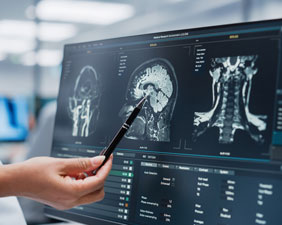
The Alzheimer’s Imaging Consortium (AIC), a preconference to AAIC, will focus on the frontiers of neuroimaging of Alzheimer’s and other dementia. The program will focus on novel imaging techniques and analysis, how neuroimaging can drive discoveries in and improve understanding of the disease, and how these innovations can have an impact on clinical applications. The program consists of invited speakers, oral and poster presentations from submitted abstracts, a mentoring lunch for early career researchers, and a panel discussion. AIC brings together neuroimaging researchers from around the world and highlights the technical progress and recent innovations in neuroimaging that will enhance clinical applications of the future. A reception will follow for registered attendees.
This preconference is organized by the Neuroimaging Professional Interest Area of ISTAART.

Technology and Dementia
Saturday, July 11: 8 a.m. – 5 p.m.
View the agenda
Technology and Dementia, a preconference to AAIC, will convene researchers and members of the industry interested in technology research and development, including mobile technology, home-based technology and social networking. Sessions explore various types of technologies as tools to support innovative study design in research and as interventions for persons living with dementia and their care partners. The program consists of invited speakers, as well as oral and poster presentations from submitted abstracts. A reception will follow for registered attendees.
This preconference is organized by the Technology and Dementia Professional Interest Area of ISTAART.
ISTAART PIA Day
Saturday, July 11: 8 a.m. – 5 p.m.
View the agenda
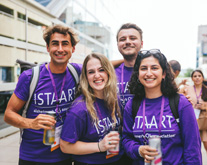
ISTAART Professional Interest Area (PIA) Day is an exclusive event for current and new ISTAART members. The event features targeted sessions, interactive panels, debates and networking opportunities, running concurrently with the AAIC preconference and ISTAART Immersives workshop programs. PIA Day provides a platform for members to engage with peers and experts, fostering collaboration and engagement within the ISTAART community. Learn about ISTAART benefits and how to join.
Saturday: Morning events

How to Approach Representativeness in Clinical Studies
Saturday, July 11: 8 a.m. – noon
View the agenda
This workshop will methodologically explore the concept of representativeness, grounded in epidemiologic principles but with clear and explicit implications for clinical research. Attendees will examine what it means for a study base or source population to truly represent a target domain, and how misconceptions about representativeness can compromise inference, generalizability and causal interpretation. Through lectures, interactive exercises and real-world examples, the workshop will cover recruitment strategies, diagnostic pathways, disease heterogeneity, and considerations of equity and diversity.

Exploring the Seattle Alzheimer's Disease Brain Cell Atlas
Saturday, July 11: 8 a.m. – noon
View the agenda
This workshop introduces the Seattle Alzheimer’s Disease Brain Cell Atlas (SEA-AD), a collaborative open-science project combining single-cell multi-omics, spatial transcriptomics, neuropathology and machine learning to map molecular and cellular changes across Alzheimer’s disease progression. Attendees will learn about the SEA-AD cohort and explore tools for data access, analysis, visualization and exploration, with hands-on guidance and example research use cases.

Fundamentals of Data Visualization and Communication in Dementia Research
Saturday, July 11: 8 a.m. – noon
View the agenda
This session explores how effective data visualization can translate complex dementia research into clear, intuitive and accessible formats. Attendees will learn foundational visual design principles: color, layout, shape, and scale, and how to select appropriate visualizations for different data types. The session also addresses accessibility needs, such as color-vision deficiencies, low vision, and cognitive load, and how these considerations shape design choices.
Manuscript Peer Review Workshop by A&D Journal Editors
Saturday, July 11: 8 a.m. – noon
View the agenda
This workshop will provide training on performing journal peer-review to graduate students, postdocs and junior faculty.

Partnering with the Veterans Health Administration (VHA) for Alzheimer’s Disease Research
Saturday, July 11: 8 a.m. – noon
View the agenda
This workshop provides guidance on partnering with the VHA to sponsor or conduct clinical research and is open to VHA and non-VHA investigators, VHA non-profit corporations and potential industry partners. Attendees will learn about the current state of Alzheimer’s research within the VHA, how to engage in investigator-initiated and sponsored clinical trials, establish VA-industry partnerships, work with non-profit corporations and navigate the administrative processes required to start a study.
Saturday: Afternoon events
Integrating Data Resources for AD/ADRD Research: Biomarkers, Imaging and NIAGADS Genetics and Genomics Data from the ADSP
Saturday, July 11: 1 – 5 p.m.
View the agenda
This workshop will provide an overview of genetic, genomic and biomarker data from the ADSP and other open-access resources. Attendees will learn how to access, integrate and analyze these datasets, including amyloid and tau PET, plasma and CSF markers, as well as how to apply biological staging frameworks for Alzheimer’s disease. Hands-on exercises using curated datasets and R will build practical skills in data selection, analysis and interpretation.

Genome Engineering for High-Resolution Drug Target Mapping in Human Microglia
Saturday, July 11: 1 – 5 p.m.
View the agenda
This workshop introduces attendees to next-generation CRISPR dense mutagenesis approaches for rational drug target mapping, with a particular focus on applying these strategies in human microglia and other advanced cellular models. Attendees will learn how to design and implement saturating mutational libraries, engineer precise domain-level perturbations and uncover functional hotspots within disease-associated proteins and multi-protein complexes.

Advancing Alzheimer’s Trials Through BEST Biomarker Practices and Study Design
Saturday, July 11: 1 – 5 p.m.
View the agenda
This workshop introduces Alzheimer’s researchers to the BEST (Biomarkers, Endpoints and other Tools) resource and demonstrates how it can be applied alongside the ATNIVS framework and STRIVE criteria to improve study design. Attendees will learn best practices for biomarker validation, defining the “context of use,” and key statistical considerations for discovery and validation. This session will provide practical tools and examples to integrate these frameworks into research planning and standardize outcomes.

Building Your Scientific Brand: Oral Presentation and Networking Skills
Saturday, July 11: 1 – 5 p.m.
View the agenda
This workshop will be given by the first cohort of ISTAART Ascent fellows and will provide attendees with skills on how to develop their unique scientific brand by exploring public speaking styles, developing networking skills, and tailoring these skills to different cultures and environments to adapt it to an individual's work environment.

The Other Side of the Table: A Mock Grant Peer-Review Panel for Early Career Researchers
Saturday, July 11: 1 – 5 p.m.
View the agenda
This workshop helps early career individuals strengthen essential skills for securing funding and growing as independent investigators. This includes strategies to diversify funding and insights from various funding organizations who will share funding opportunities and tips for success. The session will offer attendees guidance on the review process and key considerations for writing competitive applications.
Advance Your Career
Join ISTAART, an inclusive global network of scientists, clinicians and dementia professionals. With newly discounted rates and free memberships for students, it’s easier than ever to become a part of ISTAART.